Xunpu Village Travel Guide: Flower Hairpins, Oyster-Shell Houses, and Minnan Culture
Xunpu Village (蟳埔村) is a coastal community in Quanzhou, Fujian Province, known for its traditional flower hairpins, oyster-shell houses, and Minnan fishing village culture.
Its best-known tradition is Zanhuawei (簪花围), a floral headdress worn by local women. Visitors can learn about the custom and choose to try a flower headdress and traditional-style clothing.
There is more to the village than photography, however. Walk through its lanes, and you may find traditional houses decorated with oyster shells, seafood restaurants, small shops, and glimpses of everyday life.
If you are visiting Quanzhou and want to explore its coastal culture beyond the city’s maritime trade sites, Xunpu Village is worth considering for a half-day trip.
Before you go: Opening arrangements, prices, transport services, and photography packages can change. Check current details with local tourism sources or service providers before your visit.

Where Is Xunpu Village?
Xunpu Village is in Fengze District, Quanzhou, Fujian Province, near Quanzhou Bay in southeastern China.
Local life has long been connected to the sea. Fishing, seafood trading, and maritime culture have helped shape the community, including its distinctive clothing and floral headdress traditions.
At a glance:
- Chinese name: 蟳埔村
- English name: Xunpu Village
- Location: Fengze District, Quanzhou, Fujian Province
- Known for: Zanhuawei flower headdresses, oyster-shell houses, and Minnan fishing village culture
- Suggested visit: Approximately 2–4 hours

Why Visit Xunpu Village?
Quanzhou is known for its historic maritime trade and religious sites. Xunpu Village offers another perspective on the city’s relationship with the sea: the traditions and daily life of a coastal community.
During your visit, you can learn about the flower-wearing custom, look for oyster-shell houses, try local seafood, and explore the village lanes.
You do not have to book a costume or photography package to visit. Walking around the village is also an option. Remember that Xunpu is a living community as well as a visitor destination, so be considerate of residents as you explore.

Zanhuawei: Xunpu’s Traditional Flower Headdress
What Is Zanhuawei?
Zanhuawei (簪花围) is a traditional floral headdress associated with women in Xunpu Village. The flowers are arranged around a hair bun to form a decorative circle.
The flowers and ornaments used can vary with the season, occasion, and wearer’s preferences. Traditional clothing can also include a loose-fitting top, long trousers, and other accessories.
For visitors unfamiliar with Minnan culture, Zanhuawei offers an introduction to the region’s traditional dress and local customs.
A local saying expresses the hope that wearing flowers brings beauty throughout one’s life and beyond. It reflects people’s wishes for beauty and a good life.
Can Visitors Try a Flower Headdress?
Yes. Some businesses in Xunpu Village offer flower headdresses, clothing rental, makeup, and photography services. Depending on the provider, you may be able to choose your headdress, outfit, and photo locations.
Services and prices vary, so ask what is included before booking:
- The flower headdress, clothing rental, and makeup
- Any extra charges for fresh flowers or accessories
- The number of photos and whether retouching is included
- The clothing rental period and any required deposit
- When and how the photos will be delivered
- Cancellation and rescheduling policies
Prices and waiting times may change during busy periods. Confirm the total price, including any additional charges, before paying, and keep your booking information.

Oyster-Shell Houses in Xunpu Village
What Are Oyster-Shell Houses?
Oyster-shell houses, known as keqiao cuo (蚵壳厝), are a distinctive type of traditional house found in parts of southern Fujian. In the local language, cuo refers to a house.
Some walls are built or decorated using oyster shells alongside other materials. The shells create a distinctive texture and reflect how residents made use of resources from the sea.
You may find oyster-shell houses in the village lanes. As you walk, look at the exterior walls, roof structures, and the way the houses fit into the surrounding streets.
Why Were Oyster Shells Used in Local Houses?
Xunpu Village is close to the sea, where oyster shells were an accessible material. Their use in construction gradually became a recognizable feature of local architecture.
There are different local accounts about the origins of some shells and their possible connection to historic maritime trade. If you are interested in this history, ask a local guide or visit a cultural exhibition for more context.
Visitor tip: Some traditional houses are still private homes. Do not enter courtyards without permission, touch residents’ belongings, or block entrances and passageways.

Best Things to Do in Xunpu Village
1. Try a Flower Headdress and Take Photos
Trying Zanhuawei is one of the most popular visitor experiences in Xunpu Village. After putting on a floral headdress and local-style clothing, you can take photos in the village lanes or near traditional buildings.
For softer natural light, consider taking photos in the morning or later in the afternoon. Weekends and public holidays may be busier, so allow extra time for waiting.
2. Walk Through the Village Lanes
Exploring on foot is a good way to see Xunpu at your own pace. You may come across oyster-shell walls, small shops, clothing rental businesses, and residents going about their day.
Wear comfortable shoes and watch for vehicles and uneven surfaces. Ask for permission before photographing residents, especially when taking close-up portraits.
3. Look for Oyster-Shell Houses
The village’s oyster-shell houses offer a closer look at local building traditions. Notice the patterns of the shells on the walls and how the houses sit alongside the narrow lanes.
Follow any preservation signs. Do not climb on walls or remove oyster shells.
4. Try Quanzhou and Minnan Food
Seafood is an important part of the local diet around Quanzhou. In and around Xunpu Village, look for restaurants serving fish, shrimp, shellfish, and other seasonal ingredients prepared in local styles.
You can also try Minnan specialties in central Quanzhou, including:
- Mianxianhu (面线糊): A thick soup made with thin wheat noodles.
- Tusundong (土笋冻): A chilled savory jelly traditionally made with a type of marine worm.
Ingredients and preparation vary by restaurant. If you have an allergy, especially to shellfish, fish, or peanuts, tell the staff clearly before ordering.
For seafood, ask whether the price is per dish, per item, or by weight before you order.

Best Time to Visit Xunpu Village
Quanzhou generally has a warm climate, although temperatures, rainfall, and visitor numbers vary throughout the year.
Spring and Autumn
Spring and autumn are generally comfortable seasons for walking and outdoor photography. Check the forecast for the day of your visit, as conditions can vary.
Summer
Summer can be hot and humid. Bring water and sun protection, and avoid spending too long outdoors around midday.
Pay attention to typhoon and heavy-rain warnings in summer and early autumn.
Winter
Winter in Quanzhou is generally milder than in northern China, but coastal areas can be windy. Bring a jacket, particularly if you plan to stay outdoors for a while.
Check the local forecast before traveling. During a typhoon, heavy rain, or other severe weather, follow local guidance and adjust your plans.

Does Xunpu Village Have an Entrance Fee?
Xunpu is an inhabited village that visitors can usually enter on foot. Flower headdresses, clothing rental, photography, food, and other services generally cost extra.
Fees and local management arrangements may change. Check with a local tourism information source or service provider before your visit.

How to Get to Xunpu Village
Xunpu Village is within Quanzhou’s urban area. Depending on where you start, you can travel by taxi, ride-hailing service, or public transport.
From Central Quanzhou
A taxi or ride-hailing service is a convenient option for many visitors. Search for “蟳埔村” in a map app, or show the driver the destination in Chinese:
福建省泉州市丰泽区蟳埔村
Xunpu Village, Fengze District, Quanzhou, Fujian Province
Travel time and cost depend on your starting point, traffic, and pickup and drop-off locations. Check a map app for the current route and estimated fare before setting out.
From Quanzhou Railway Station or the Airport
From Quanzhou Railway Station (泉州站) or Quanzhou Jinjiang International Airport (泉州晋江国际机场), you can consider a taxi, ride-hailing service, or public transport, depending on your luggage and itinerary.
Public transport routes and schedules can change. Check a map app for current options and save the destination’s Chinese name before you travel.

How Much Time Do You Need in Xunpu Village?
Plan to spend approximately two to four hours in Xunpu Village.
A shorter visit may be enough if you mainly want to walk through the lanes and see the oyster-shell houses. Allow more time if you plan to arrange a flower headdress, makeup, clothing rental, and photography.
Here is a suggested route:
- Arrive in Xunpu Village and take a short walk to get your bearings.
- Explore the lanes and look for oyster-shell houses.
- If you want a Zanhuawei experience, compare providers and confirm the price and services.
- Take photos in suitable locations and enjoy a meal nearby.
Adjust the order to suit the weather, any photography reservation, and your interests.

Places to Visit Alongside Xunpu Village
If you have a full day or longer in Quanzhou, you can combine Xunpu Village with attractions in the city.
Kaiyuan Temple
Kaiyuan Temple (开元寺) is a Buddhist temple known for its historic architecture and East and West Pagodas. It is a good choice for visitors interested in Chinese religious culture and traditional buildings.
West Street
West Street (西街) is a popular area in Quanzhou’s old town for walking, trying local snacks, and seeing historic buildings.
Quanzhou Maritime Museum
The Quanzhou Maritime Museum (泉州海外交通史博物馆) is an option for visitors who want to learn more about the city’s connections with maritime trade. Check the museum’s official information for current opening hours and reservation requirements.
When planning your route, check the distances between attractions and allow time for traffic within the city.
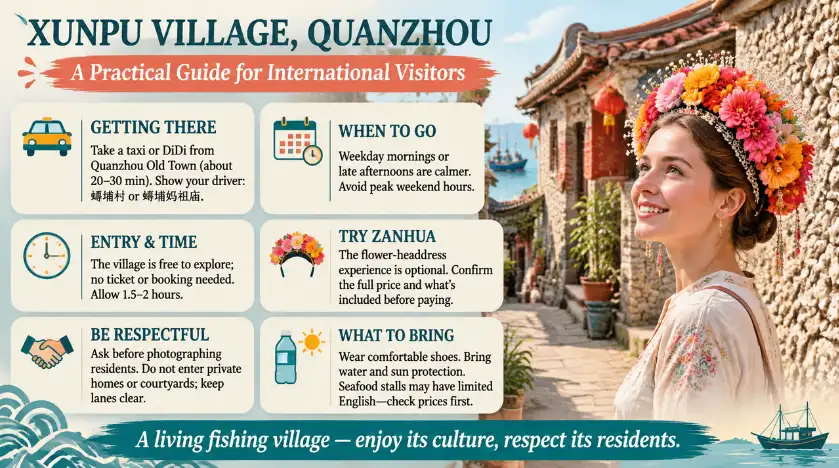
Practical Tips for International Visitors
- Save the Chinese name: Keep “蟳埔村” on your phone for taxis, directions, and map searches.
- Check payment options: Mobile payments are common in China. Check whether your preferred payment method works before your trip and ask businesses what they accept.
- Use a translation app: Some small businesses may primarily communicate in Chinese. A translation app can help you discuss prices, services, and dietary needs.
- Respect residents: Ask before taking portraits or entering private spaces. The village is a community, not just a tourist attraction.
- Confirm package prices: Flower headdress and photography packages differ. Ask about the total cost and any extra charges before paying.
- Watch the weather: Rain and typhoons can affect outdoor visits and photography.

Xunpu Village FAQs
Is Xunpu Village worth visiting?
Xunpu Village is worth considering if you are interested in traditional dress, local architecture, photography, or Minnan fishing village culture. You can try a flower headdress experience or explore the lanes and observe the village’s architecture and daily life.
Can you visit Xunpu Village without booking a flower headdress experience?
Yes. You can walk through the village, look at the oyster-shell houses, and eat nearby without booking a flower headdress or photography package. These services are optional and usually cost extra.
Can men and children try Zanhuawei?
Some businesses may offer flower headdresses or clothing experiences for men and children. Clothing sizes, flower styles, and services vary, so ask the provider in advance.
Is Xunpu Village suitable for families with children?
Families can explore the village on foot and ask local providers about flower headdress experiences for children. Keep an eye on children in the lanes and watch for vehicles and changing crowd conditions.
Can you photograph local residents?
Ask politely first and take photos only after receiving permission. Respect anyone who does not want to be photographed, and do not enter a private home for a photo.
Can you visit Xunpu Village and central Quanzhou on the same day?
Yes. You can combine Xunpu Village with attractions in Quanzhou’s old town in one day. Plan around traffic, attraction opening hours, and any photography appointments.
Plan Your Visit to Xunpu Village
Xunpu Village is more than a place to try flower headdresses and take photos. Its Zanhuawei tradition, oyster-shell houses, and coastal food culture offer a closer look at life in a Minnan fishing community.
Allow a few hours to explore, check the details of any paid experience before booking, and respect the people who call the village home.
Related Reading:
- Luoyang Bridge Quanzhou: China’s First Cross-Sea Stone Bridge Guide
- Qingjing Mosque Quanzhou: China’s Oldest Islamic Temple Guide
- Does Quanzhou Have English-Speaking Tour Guides? | Full Guide
- Quanzhou Attractions: UNESCO Sites & Hidden Gems for Foreigners
- How Many Days in Quanzhou? 1, 2, 3, & 4-Day Itinerary Guide
- Quanzhou vs Xiamen: Which City Should You Visit? | Full Comparison
- Quanzhou Travel Guide: Maritime Silk Road, Temples & Food
- 2026 Xiamen Transportation Guide: Metro, Bus, Ferry & Taxi Tips for Foreigners
- What is Xiamen Famous For? | Gulangyu World Heritage, Food, Beaches & SEZ
- How Many Days Do You Need in Xiamen? 2026 Itinerary Guide