Quanzhou Food Guide: Traditional Snacks and Local Dishes Foreign Visitors Should Try
Quanzhou, in southeastern Fujian Province, is one of the best places in China to experience Minnan food culture. The city is close to the coast and has abundant seafood. Its long history of maritime trade has also influenced its cuisine, combining local Minnan traditions with seafood and culinary influences from different regions.
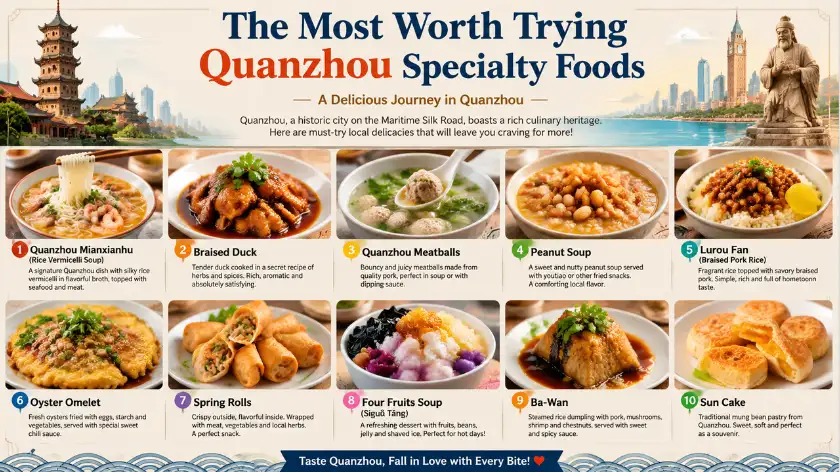
First-time international visitors may encounter many unfamiliar dishes in Quanzhou’s street food shops, traditional markets, and old-town restaurants. Popular examples include oyster omelet, mianxianhu, tusundong, ginger duck, and four-fruit soup. Their appearance, texture, and cooking methods are often very different from Western food.
If you are planning a trip to Quanzhou, this Quanzhou food guide introduces the city’s best traditional foods, recommended dining areas, ordering tips, and practical advice for international visitors.
Quanzhou is also part of the “Quanzhou: Emporium of the World in Song-Yuan China” UNESCO World Heritage Site, reflecting the city’s long history as a maritime trading center. You can learn more about the city’s historical significance on the official UNESCO World Heritage page.
Important note: Ingredients, prices, opening hours and restaurant menus can change. Seafood prices may also depend on the season and daily supply. Confirm the ingredients and total price before ordering.
What Is Quanzhou Food Like?
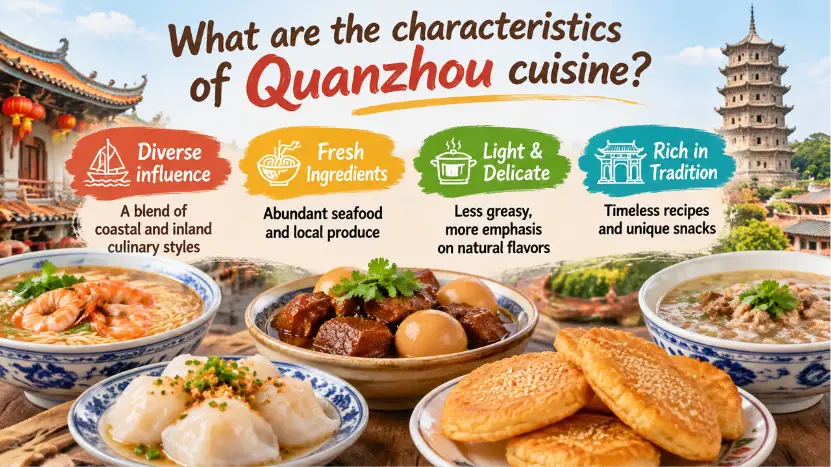
Quanzhou cuisine has several features that international visitors may notice.
Seafood and Local Ingredients
Quanzhou is close to Quanzhou Bay, so seafood plays an important role in the local diet. Oysters, shrimp, fish, crab, and other shellfish are common ingredients.
Seafood is not only steamed or stir-fried. It is also added to pancakes, soups, rice porridge, and noodle dishes, creating many snacks that are strongly associated with Quanzhou and the wider Minnan region.
Fresh Flavors Rather Than Heavy Spice
Compared with some other regions of China, traditional Quanzhou food is usually not extremely spicy. Many dishes focus on the natural flavor of the ingredients and are seasoned with garlic, ginger, white pepper, vinegar, and soy sauce.
However, the flavor can vary from one restaurant to another. If you do not like spicy food, you can say:
- 不要辣 — Bù yào là: Please do not add chili.
- 少放辣椒 — Shǎo fàng là jiāo: Please use less chili.
Remember that white pepper and chili are not exactly the same. Some soups may not contain chili but may still have a noticeable peppery flavor.
Soups and Noodles Are Common
People in Quanzhou enjoy soups, rice porridge, and noodle dishes. Mianxianhu, beef soup, and seafood soups are common breakfast or everyday meals.
For international visitors who are trying Chinese food for the first time, these dishes are often relatively easy to enjoy. They can also be a convenient light meal during a busy day of sightseeing.
A Wide Variety of Textures
Quanzhou food offers a wide range of textures:
- Soft and smooth
- Crispy and fried
- Chewy and elastic
- Cool and jelly-like
- Tender and slow-cooked
For example, tusundong has a cool, springy texture, while an oyster omelet is slightly crisp outside and soft inside. Runbing allows you to taste vegetables, seafood, meat, and peanuts in one hand-rolled snack.
The Best Traditional Food to Try in Quanzhou
1. Oyster Omelet (海蛎煎)
Oyster omelet, known as haolijian in Chinese, is one of the most representative traditional snacks in Quanzhou and the wider Minnan region.
It is usually made with fresh oysters, sweet potato starch, eggs, and scallions. The cook mixes the oysters with the starch, fries the mixture in a pan, and then adds eggs.
The finished dish is usually slightly crispy on the outside and soft and chewy inside, with a strong fresh seafood flavor. International visitors may find it similar to an oyster pancake, although the texture is often stickier because of the sweet potato starch.
Some restaurants serve oyster omelets with sweet chili sauce or another dipping sauce.
Ordering Tips
If you are allergic to shellfish, confirm whether the dish contains oysters before ordering.
The size and number of oysters may vary between restaurants. Prices can also change according to the season and seafood supply.
You can ask:
这道菜有牡蛎吗?
Does this dish contain oysters?
2. Mianxianhu (面线糊)
Mianxianhu is a traditional Quanzhou breakfast made with very thin noodles in a thick, smooth soup.
Depending on the restaurant, the soup may contain pork, seafood, mushrooms, fried pork, pieces of youtiao, or other toppings. Ingredients vary from one shop to another.
Mianxianhu is usually smooth and easy to eat. Local diners sometimes cut youtiao, or Chinese fried dough sticks, into small pieces and add them to the soup. The crispy pieces create a contrast with the soft noodles.
How to Eat Mianxianhu
You can first taste the soup as it is. Then add white pepper, vinegar, or chili sauce according to your preference.
Some restaurants display the toppings separately, allowing you to choose what you want.
If you are unsure about the ingredients, ask:
里面有什么?
Lǐmiàn yǒu shénme?
What is in it?
Vegetarians should ask whether the soup base contains pork, seafood, meat stock or animal fat.
3. Ginger Duck (姜母鸭)
Ginger duck, or jiangmuya, is a traditional Fujian dish that is also popular in Quanzhou.
It is usually made by slowly cooking duck with mature ginger and various seasonings. After being simmered for a long time, the duck becomes tender and absorbs the strong aroma of ginger.
Ginger duck is often served in a clay pot or another container that keeps the food hot. It is usually suitable for sharing with several people.
Who Might Enjoy Ginger Duck?
Ginger duck is worth trying if you enjoy rich flavors, stewed meat, and dishes with a strong herbal or ginger aroma.
The ginger flavor can be intense, so first-time visitors may want to try a small amount before ordering a large portion.
Some restaurants use cooking wine or other alcoholic ingredients. If you avoid alcohol, ask the restaurant staff before ordering:
这道菜里有酒吗?
Does this dish contain alcohol?
4. Tusundong (土笋冻)
Tusundong is one of the most distinctive traditional snacks in Quanzhou and the Minnan region.
Despite the Chinese name, tusundong is not made from bamboo shoots. It is made from a small marine animal found in coastal sand. The ingredient is cleaned, boiled, and cooled until it forms a firm, jelly-like food.
Tusundong is usually transparent or semi-transparent. It has a cool, springy texture and is commonly served with soy sauce, minced garlic, vinegar, or chili sauce.
What Should International Visitors Know?
The appearance and texture of tusundong may be unfamiliar to many international visitors. If you are unsure about the ingredients, ask the restaurant before ordering.
If you are allergic to seafood, shellfish, or marine animals, confirm the ingredients carefully.
You can ask:
土笋冻的原料是什么?
What is tusundong made from?
5. Four-Fruit Soup (四果汤)
Four-fruit soup, known as siguotang, is a refreshing traditional dessert that is especially popular in warm weather.
Although the name suggests that it contains four fruits, modern versions may include more than four ingredients. Common ingredients include:
- Grass jelly
- Barley
- Red beans
- Mung beans
- Lotus seeds
- Snow fungus
- Shihua jelly
- Fresh fruit
The ingredients are usually served with chilled water or sweet syrup. The sweetness and toppings vary from one shop to another.
Four-fruit soup is a good choice after walking around Quanzhou in summer. It can also be served as a light dessert after a meal.
Ordering Tips
If you do not like very sweet desserts, say:
少糖 — Shǎo táng
Less sugar.
If you do not want ice, say:
不要冰 — Bù yào bīng
No ice.
6. Quanzhou Beef Soup (牛肉羹)
Quanzhou beef soup is a traditional soup made with beef. The beef may be sliced or processed into small pieces before being cooked in the soup.
The flavor is usually mild, with white pepper and other seasonings. Some restaurants serve the soup with rice, noodles or another staple food.
Beef soup can be eaten for breakfast, lunch, or dinner. For international visitors who are not yet familiar with Chinese snacks, it is often a relatively accessible choice.
Ask whether the soup contains other meat products if you have dietary restrictions.
7. Runbing (润饼)
Runbing, also called a Minnan spring roll or fresh spring roll, is a traditional food that you assemble and eat by hand.
A soft, thin wrapper is filled with ingredients such as:
- Cabbage
- Carrot
- Bean sprouts
- Mushrooms
- Sliced meat
- Shrimp
- Crushed peanuts
The exact ingredients vary by household and restaurant.
To eat it, place the fillings on the wrapper and roll it into a cylinder. It may remind international visitors of a fresh vegetable wrap or soft pancake roll, but the fillings and seasonings are distinctive to Minnan cuisine.
Is Runbing Suitable for International Visitors?
Yes. Because you can choose some of the fillings yourself, it is relatively easy to adjust the flavor to your preferences.
However, crushed peanuts are commonly used. If you have a peanut allergy, tell the restaurant before ordering.
这道菜里有花生吗?
Does this dish contain peanuts?
8. Quanzhou Meat Zongzi (肉粽)
Quanzhou meat zongzi is made with glutinous rice, pork, mushrooms, chestnuts, dried shrimp, and other ingredients. The mixture is wrapped in bamboo leaves and steamed or boiled.
Unlike sweet zongzi found in some parts of China, Quanzhou meat zongzi is generally savory. The glutinous rice absorbs the meat juices and seasonings, giving it a rich flavor.
It can be eaten as breakfast, a snack, or a simple lunch. Glutinous rice is filling, so one zongzi may be enough for a small meal.
If you do not eat pork, confirm the filling before ordering.
9. Vinegar Meat (醋肉)
Vinegar meat, known as curou, is a traditional Quanzhou snack made with pork, vinegar, sugar, starch, and seasonings.
The pork is marinated and fried. The outside becomes crispy, while the inside has a sweet-and-sour flavor.
Vinegar meat can be eaten alone or served with mianxianhu, rice noodles, or another staple food.
It may suit visitors who enjoy sweet-and-sour flavors and fried food. Some restaurants use more vinegar than others, so first-time visitors may prefer to try a small portion.
10. Chongwu Fish Roll (崇武鱼卷)
Chongwu fish roll comes from the Chongwu area of Hui’an County near Quanzhou. It is part of the seafood tradition of southern Fujian.
Fish is processed into a paste, shaped into a roll, and then steamed, boiled, or pan-fried. Fish rolls have a springy texture and a relatively mild flavor. They are often sliced and served as a snack or side dish.
If you are traveling around Quanzhou, Hui’an, or Chongwu, look for locally made fish rolls. The type of fish and preparation method may vary between shops.
11. Shihua Jelly (石花膏)
Shihua jelly is a cool dessert commonly found in Quanzhou and other parts of the Minnan region.
It is usually transparent or semi-transparent, with a smooth and soft texture. It may be served with fruit, red beans, grass jelly, and sweet syrup.
Shihua jelly is especially refreshing in hot weather. It is also a light option for visitors who do not want a heavy or oily dessert.
12. Minnan Seafood
Trying fresh seafood is an important part of a Quanzhou food trip.
Common choices include:
- Fish
- Shrimp
- Crab
- Oysters
- Razor clams
- Other shellfish
Restaurants may steam, blanch, fry, stir-fry, or cook the seafood in soup.
Before ordering seafood, confirm:
- Whether the price is per portion, per item, or by weight
- The unit used for the price on the menu
- Whether a preparation or cooking fee is charged
- Whether the seafood was supplied that day
- Whether you can choose the cooking method
- Whether advance booking is required
If the menu does not show a clear price, ask for the total cost before ordering. This can help avoid misunderstandings.
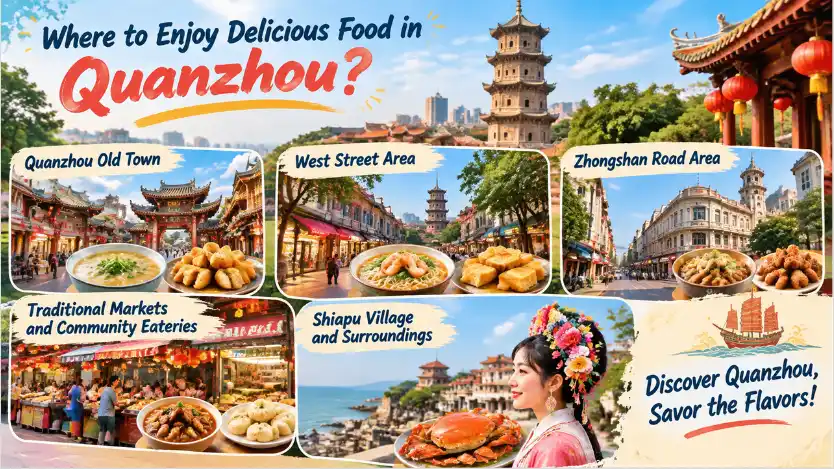
Where to Eat in Quanzhou
1. Quanzhou Old Town
Quanzhou Old Town has many traditional snack shops, breakfast restaurants, and long-established local eateries.
The areas around West Street, East Street, and Zhongshan Road are convenient places to look for local food. You can find both small shops for a quick meal and restaurants serving traditional dishes.
Some old-town shops are small and may have queues during peak meal times. Consider visiting outside the busiest hours or preparing several alternative restaurants.
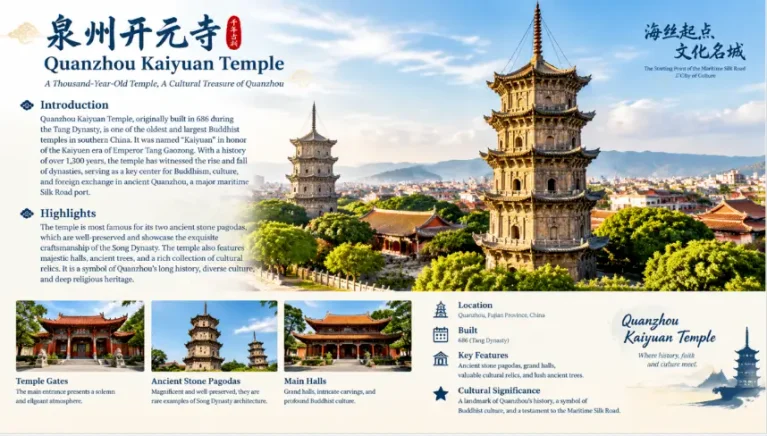
Quanzhou’s historic center is also a convenient base for combining food with sightseeing. You can explore the old town and visit attractions listed in this Quanzhou travel guide if your website uses this page URL. Replace the link with the correct existing URL before publishing if necessary.
2. Around West Street
West Street is one of Quanzhou’s best-known historic areas. In addition to traditional buildings and cultural attractions, it has many snack shops, dessert stalls, and local restaurants.
You can combine West Street with Kaiyuan Temple and the Bell Tower in one day, using the walking time between attractions to look for local food.
Some shops in popular tourist areas may be particularly oriented toward visitors. Their prices and flavors may not represent the everyday choices of local residents. Check customer reviews and observe whether local diners are also eating there.
3. Around Zhongshan Road
The area around Zhongshan Road has traditional commercial streets and restaurants serving:
- Mianxianhu
- Meat zongzi
- Beef soup
- Local desserts
- Other Minnan snacks
The area is relatively convenient for visitors and can be included in a city sightseeing route.
4. Traditional Markets and Neighborhood Restaurants
If you want to see how local residents eat in everyday life, consider visiting a traditional market or a restaurant in a residential neighborhood.
Menus may not be available in English, and staff may not speak English. However, you can often order using food photos, a translation app, or simple gestures.
Before visiting a small restaurant, save the Chinese names of the dishes you want to try and confirm which payment methods are accepted.
5. Xunpu Village and the Surrounding Area
If you plan to visit Xunpu Village, you can combine the visit with seafood and Minnan food.
Xunpu Village is known for Zanhuawei floral headdresses, oyster-shell houses, and Minnan fishing village culture. You can explore the traditional village first, then enjoy seafood or other local dishes nearby.
For more ideas about nearby attractions and route planning, see the Quanzhou travel guide. If your trip also includes Xiamen, you can use this Xiamen travel guide to plan the wider Fujian itinerary.
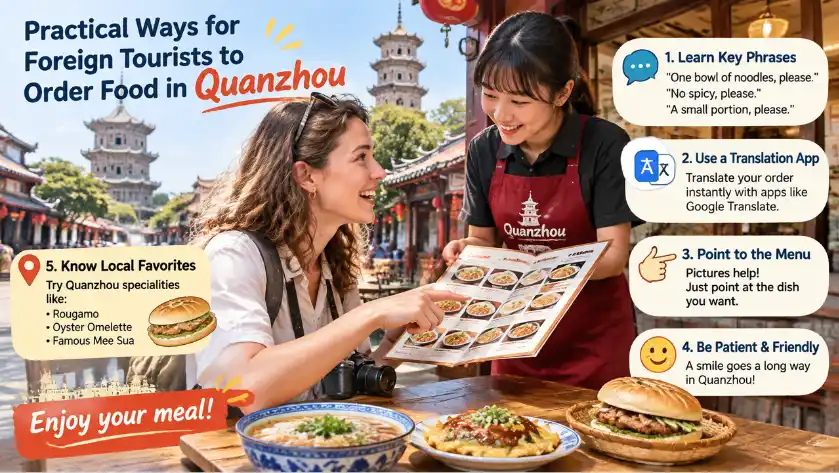
Practical Ordering Tips for International Visitors
Save the Chinese Names of Common Dishes
Save these dish names on your phone so you can show them to restaurant staff:
- 海蛎煎 — Oyster omelet
- 面线糊 — Mianxianhu
- 姜母鸭 — Ginger duck
- 土笋冻 — Tusundong
- 四果汤 — Four-fruit soup
- 牛肉羹 — Beef soup
- 润饼 — Runbing
- 肉粽 — Meat zongzi
- 醋肉 — Vinegar meat
- 鱼卷 — Fish roll
Showing the Chinese name is often more reliable than trying to pronounce an unfamiliar dish.
Use a Translation App to Check Ingredients
If you have a food allergy, religious dietary restriction, or other special requirement, use a translation app to communicate clearly with the restaurant staff.
Useful questions include:
这道菜里有花生吗?
Does this dish contain peanuts?
这道菜里有海鲜吗?
Does this dish contain seafood?
这道菜里有猪肉吗?
Does this dish contain pork?
这道菜里有酒吗?
Does this dish contain alcohol?
这道菜里有鸡蛋吗?
Does this dish contain eggs?
汤里有肉汤吗?
Is the soup made with meat stock?
For serious allergies, do not rely only on a short verbal explanation. Show the information in Chinese and confirm it with the restaurant staff.
Ask About Chili and White Pepper
Quanzhou food is not always spicy, but some soups and seafood dishes may contain chili sauce or white pepper.
If you do not enjoy spicy or peppery flavors, do not only say “no chili.” You can also ask:
里面有胡椒吗?
Does it contain pepper?
Check Restaurant Opening Hours
Many traditional snack shops mainly open during breakfast or lunch. Some close for several hours in the afternoon.
Popular dishes may also sell out before the official closing time. If you want to try a particular food, check the restaurant’s opening hours on the day of your visit.
Prepare a Payment Method
Many restaurants in China use mobile payment. Before traveling, check whether your payment method can be used with mainland Chinese merchants.
It is also sensible to carry a small amount of cash and confirm whether the restaurant accepts international bank cards.
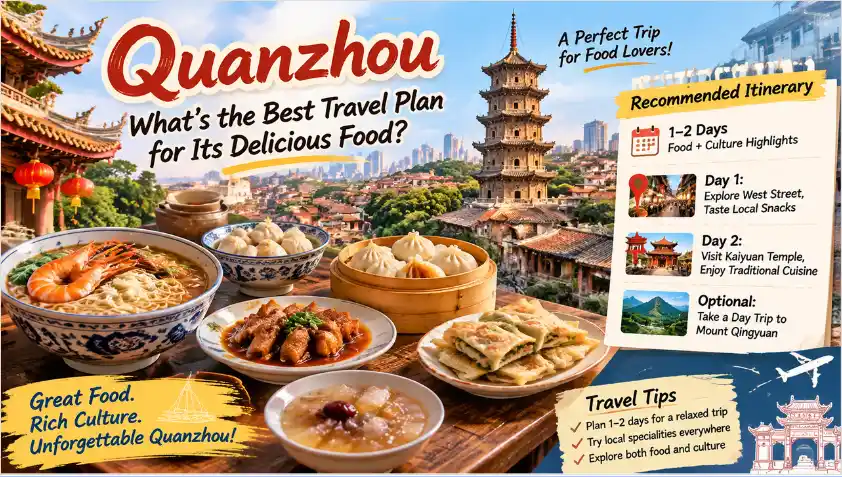
How to Plan a Quanzhou Food Trip
One-Day Quanzhou Food Itinerary
If you only have one day, combine local food with attractions in Quanzhou Old Town.
Breakfast
Start with mianxianhu or Quanzhou beef soup.
Morning Sightseeing
Visit Kaiyuan Temple, walk along West Street, and continue toward the area around Zhongshan Road.
Lunch
Try an oyster omelet, meat zongzi, or runbing.
Afternoon Dessert
Cool down with four-fruit soup or shihua jelly.
Dinner
Choose ginger duck, fresh seafood, or another Minnan dish.
This itinerary allows you to try several local foods without traveling too far between restaurants and attractions.
Two-Day Quanzhou Food Itinerary
With two days, combine Quanzhou Old Town with Xunpu Village.
Day 1: Quanzhou Old Town
Focus on the old town and try:
- Mianxianhu
- Oyster omelet
- Meat zongzi
- Four-fruit soup
You can combine meals with visits to Kaiyuan Temple, West Street, and Zhongshan Road.
Day 2: Xunpu Village and Seafood
Visit Xunpu Village to experience Zanhuawei, see oyster-shell houses, and learn about Minnan fishing village culture.
After exploring the village, look for seafood or other traditional Quanzhou dishes nearby.
If you are traveling from Xiamen to Quanzhou, check the Xiamen travel guide before planning your route by high-speed train, private car, or public transport.
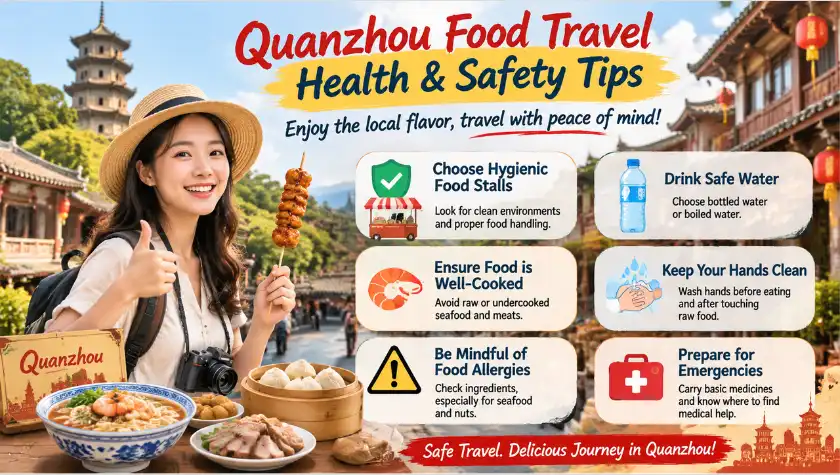
Food Hygiene and Safety Tips in Quanzhou
To enjoy local food more safely:
- Choose restaurants with steady customer traffic and reasonable food storage conditions.
- Make sure seafood is thoroughly cooked, especially in hot weather.
- If you are unfamiliar with raw or partially cooked seafood, choose fully cooked dishes.
- Confirm seafood prices before ordering.
- Tell restaurant staff about allergies before ordering.
- Don’t eat a large portion of unfamiliar food before checking its ingredients.
- Carry drinking water and any regular medication you may need.
- Avoid eating too many oily, very cold, or unfamiliar foods at once.
- Use reputable platforms to check restaurant reviews, but do not judge portion size based only on online photos.
For transport and high-speed train planning, international visitors can also check the official China Railway 12306 website. Train schedules and ticket requirements should be confirmed for your actual travel date.
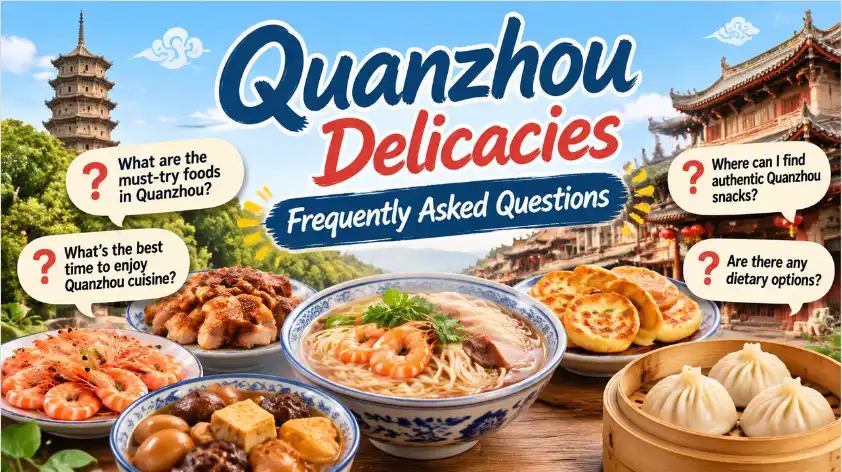
Quanzhou Food FAQs
What is the most famous food in Quanzhou?
Quanzhou’s most representative foods include:
- Oyster omelet
- Mianxianhu
- Ginger duck
- Tusundong
- Four-fruit soup
- Quanzhou beef soup
- Runbing
- Meat zongzi
Your best choice depends on your preferences. Seafood lovers can start with an oyster omelet or fresh seafood. Visitors who prefer mild soups may enjoy mianxianhu or beef soup. Those with a sweet tooth can try four-fruit soup or shihua jelly.
Is Quanzhou food spicy?
Most traditional Quanzhou dishes are not heavily spicy. However, some dishes may contain chili, white pepper or chili sauce.
Tell the restaurant staff whether you eat spicy food before ordering. If you are sensitive to pepper, ask whether the dish contains white pepper as well.
Is it easy for international visitors to order food in Quanzhou?
Restaurants in popular tourist areas may offer picture menus or limited English service. Traditional snack shops and neighborhood restaurants may use Chinese only.
Saving the Chinese names of dishes and using a translation app can make ordering easier. Always confirm ingredients and prices if you have allergies or dietary restrictions.
What Quanzhou food is suitable for vegetarians?
Four-fruit soup, some vegetable-based runbing, certain vegetable snacks, and vegetarian restaurants near temples may be suitable for vegetarians.
However, soup bases, sauces, and seasonings may contain meat, seafood, pork fat, or eggs. Ask clearly before ordering:
这道菜有肉、海鲜、猪油或鸡蛋吗?
Does this dish contain meat, seafood, pork fat or eggs?
Can you combine Quanzhou food with sightseeing?
Yes. Quanzhou Old Town, West Street, Kaiyuan Temple, Zhongshan Road, and Xunpu Village all have food options nearby.
Planning attractions and meals in the same area can reduce travel time and make your itinerary more comfortable.
Is Quanzhou suitable for families with children?
Yes. Mianxianhu, beef soup, meat zongzi, and some desserts are often easy for children to try.
However, seafood, peanuts, nuts, and strongly seasoned dishes should be chosen according to the child’s age, allergies, and usual diet.
Final Thoughts
Quanzhou food is more than a list of famous snacks. It reflects the city’s coastal environment, local ingredients, maritime history, and everyday Minnan culture.
For a first visit, international travelers can begin with mianxianhu, oyster omelet, four-fruit soup, and beef soup. After that, try ginger duck, tusundong, runbing, and fresh local seafood according to your preferences.
You do not need to try every specialty in one day. Choose a few representative dishes based on your taste, dietary needs, and itinerary. This is a more comfortable way to discover Quanzhou’s local food culture.
Related Reading:
- Luoyang Bridge Quanzhou: China’s First Cross-Sea Stone Bridge Guide
- Qingjing Mosque Quanzhou: China’s Oldest Islamic Temple Guide
- Kaiyuan Temple Quanzhou: History, Twin Pagodas & Visitor Guide
- Does Quanzhou Have English-Speaking Tour Guides? | Full Guide
- Quanzhou Attractions: UNESCO Sites & Hidden Gems for Foreigners
- How Many Days in Quanzhou? 1, 2, 3, & 4-Day Itinerary Guide
- Quanzhou vs Xiamen: Which City Should You Visit? | Full Comparison