
What Is Xiamen Famous For? 2026 Travel Guide to Top Attractions & Food
What Is Xiamen Famous For?
Xiamen, a city located on China’s southeastern coast, is often referred to by travelers as the “Garden by the Sea.” Unlike Beijing, with its imperial grandeur, or Shanghai, with its towering skyscrapers, Xiamen attracts visitors from around the world with its unique laid-back charm, rich history, and unforgettable cuisine. So, what exactly is Xiamen famous for? Let’s explore this from a few different angles.
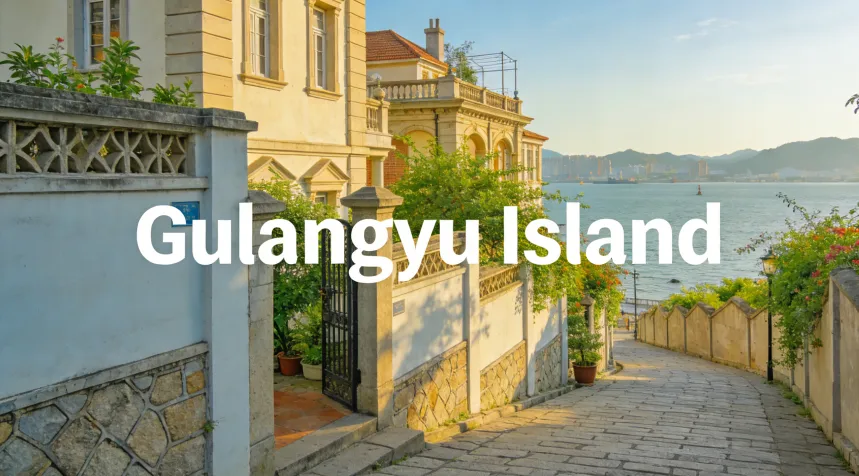
Gulangyu: A Showcase of International Architecture
When people think of Xiamen, Gulangyu is the first thing that comes to mind. This small island, covering less than 2 square kilometers, has been designated a UNESCO World Heritage Site. It is renowned for:
The tranquility of a car-free island: There are no motor vehicles on the island, so visitors can only get around on foot. You can stroll through the winding alleys and feel time flowing by.
A World of Architectural Styles: In the mid-19th century, after Xiamen became a treaty port, many nations established consulates on Gulangyu, and wealthy overseas Chinese merchants built villas here. Today, the island preserves over 1,000 historic buildings that blend Western classical, Southeast Asian, and traditional Minnan styles, earning it the reputation as a “World Architectural Exhibition.”
The Island of Pianos: Gulangyu boasts an exceptionally high density of pianos and has been the birthplace of many musicians. As you stroll around the island, you may hear the melodious sound of a piano drifting from a window. The Piano Museum and the Organ Museum are also located here.
Sunlight Rock: The highest point on the island, reaching the summit offers a panoramic view of the entire Gulangyu and downtown Xiamen, making it an excellent spot for photography.

Min Nan Cuisine: Xiamen on a Plate
Xiamen is a paradise for food lovers, renowned for its fresh seafood and unique Min Nan flavors. Here are some must-try signature dishes:
Shacha Noodles: Xiamen’s most famous noodle dish. The broth is simmered with sacha sauce, resulting in a rich and slightly spicy flavor. You can choose your own toppings, such as seafood, meat, or tofu, making every bite a multi-layered delight.
Oyster Omelette: Made by frying fresh oysters, eggs, and sweet potato starch batter, this dish is crispy on the outside and tender on the inside. Dipped in sweet and spicy sauce, it’s absolutely delicious.
Peanut Soup: A classic dessert, the peanuts are simmered until soft and chewy, and the broth is sweet without being cloying. It’s a popular choice for breakfast or a late-night snack.
Sandworm Jelly: The name might be misleading, but this is actually a gelatinous dish made from “sandworms” found on the beach. It has a jelly-like texture that’s cool and refreshing, and served with soy sauce, vinegar, and minced garlic, it’s incredibly appetizing.
Seafood: Xiamen is a coastal city, so seafood is abundant and affordable. The Eighth Market is a great place to experience the local seafood culture; you can buy fresh seafood there and have it prepared at a nearby restaurant.
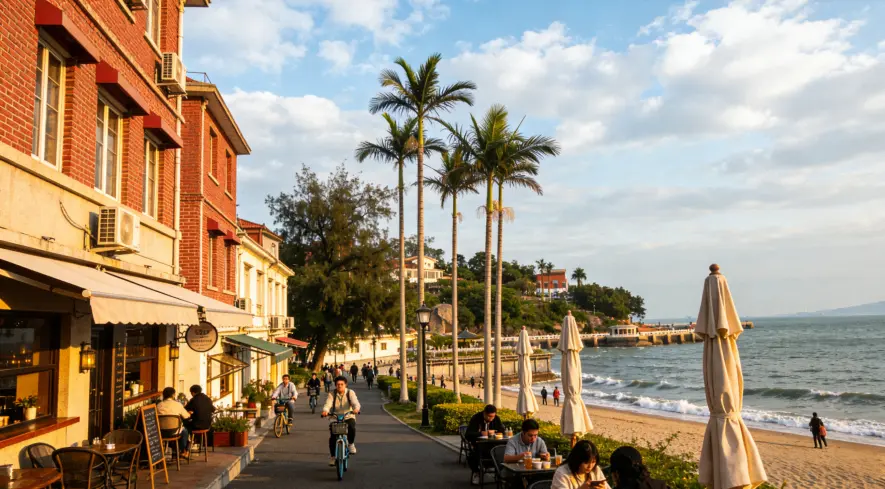
Natural Beauty and a Relaxed Lifestyle
Xiamen is renowned for its stunning natural scenery and laid-back pace of life.
Huan Dao Road: This coastal highway is often called “the most beautiful marathon route.” You can cycle or stroll along it, with the blue sea on one side and lush greenery on the other, enjoying the refreshing sea breeze—a truly delightful experience.
Beaches: Bai Cheng Beach, Huang Cuo Beach, and others are great spots for locals and tourists to relax. While the water isn’t the deep blue of a tropical island, these beaches are convenient and perfect for watching sunsets or flying kites.
Wanshi Botanical Garden: A vast botanical garden featuring a tropical rainforest zone, a succulent plant zone, and more. The desert plant zone, in particular, is home to massive cacti and is a popular spot for taking photos.
Slow Living: Xiamen locals enjoy drinking tea, hanging out in coffee shops, and strolling through parks. This laid-back atmosphere allows visitors to relax and enjoy the pleasures of travel.

History and Cultural Heritage
Although Xiamen is a modern city, it boasts a rich history and cultural heritage.
Xiamen University: Hailed as one of China’s most beautiful universities, the campus is nestled between mountains and the sea, featuring a blend of Chinese and Western architectural styles. You can visit the Jiannan Grand Hall and Furong Lake to soak up the academic atmosphere.
Nanputuo Temple: A Buddhist temple founded during the Tang Dynasty, it is open to the public free of charge. The temple is bustling with worshippers, and the hill behind it offers a panoramic view of Xiamen University and the ocean. The temple’s vegetarian cuisine is also renowned.
Jimei Academy Village: Founded by the patriotic overseas Chinese Mr. Chen Jiageng, the architecture here blends Minnan style with Western elements, known as the “Jiageng Style.” Jimei also features attractions such as Aoyuan Garden and the Dragon Boat Pond.
Min Nan Culture: Xiamen’s language (Min Nan dialect), traditional festivals (such as the Mid-Autumn Festival’s “Bopeng” game), and folk arts (such as Gezi Opera) are distinctive, offering a window into the culture of China’s southeastern coast.

As a Transportation Hub and Gateway to Surrounding Destinations
Xiamen itself is a major transportation hub, with Gaoqi International Airport connecting to many international cities and a well-developed high-speed rail network. At the same time, it serves as an ideal starting point for exploring other parts of Fujian:
Fujian Tulou: A UNESCO World Heritage Site featuring unique circular or square rammed-earth structures that once served as homes for the Hakka people.
Quanzhou: A global maritime trade center during the Song and Yuan dynasties and a UNESCO World Heritage City, home to numerous historic sites such as Kaiyuan Temple, Qingjing Mosque, and Luoyang Bridge.
Wuyi Mountain: A UNESCO World Heritage Site of both natural and cultural significance, renowned for its beautiful landscapes and tea culture.
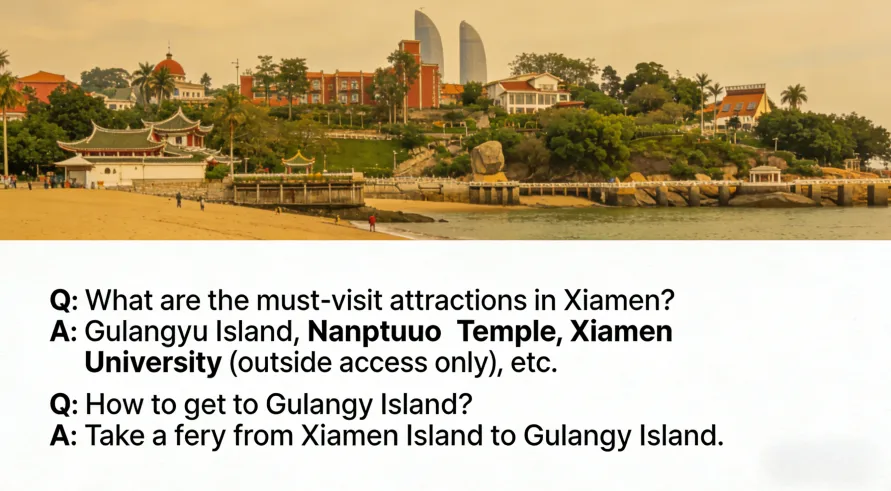
Frequently Asked Questions (FAQ)
Q: What is Xiamen’s most famous attraction?
A: Without a doubt, it’s Gulangyu Island. It is Xiamen’s iconic landmark and a UNESCO World Heritage Site, renowned for its historic architecture, pedestrian-friendly environment, and piano culture.
Q: What are some of Xiamen’s signature dishes?
A: Satay noodles, oyster omelets, peanut soup, bamboo shoot jelly, steamed pork rice dumplings, and various seafood are all representative dishes of Xiamen. The 8th Market is a great place to sample authentic local cuisine.
Q: Is Xiamen a good place for shopping?
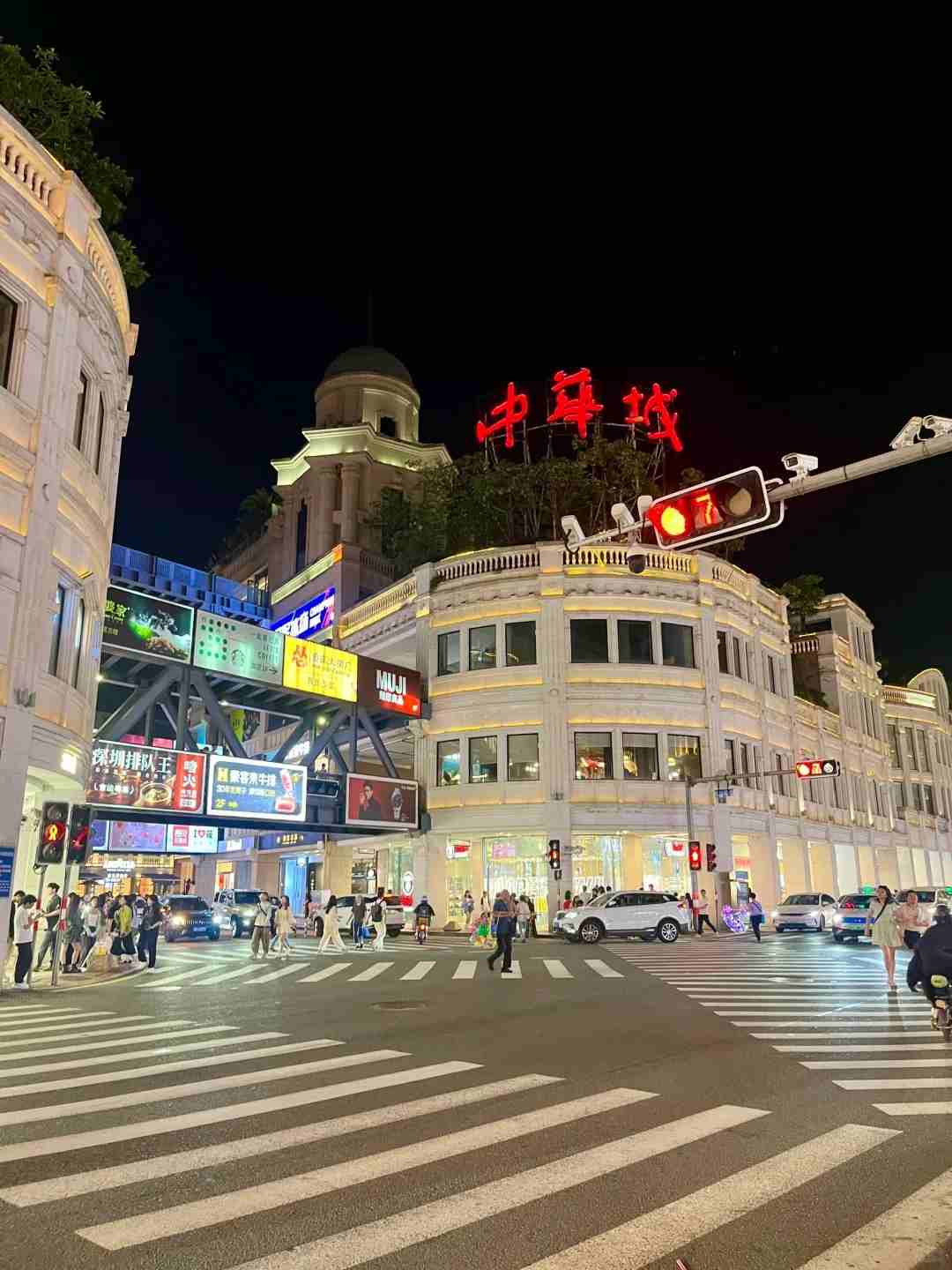
A: Zhongshan Road Pedestrian Street is the main shopping destination, featuring large shopping malls, brand boutiques, and unique small shops. Longtou Road on Gulangyu also has many souvenir shops where you can buy local specialties like Gulangyu pastries and tea.
Q: What kind of tea is Xiamen famous for?
A: Fujian is the birthplace of oolong tea, and Xiamen locals enjoy drinking Tieguanyin and Dahongpao. You can visit a teahouse to experience Gongfu tea or purchase tea leaves as souvenirs.
Q: What is the climate like in Xiamen?
A: Xiamen has a mild climate, with spring-like weather year-round. Spring and fall are the most comfortable seasons for travel. Summers are hot and rainy, with occasional typhoons; winters are cooler, but temperatures rarely drop below 10°C.
Q: What is the pace of life like in Xiamen?
A: Xiamen is known for its laid-back lifestyle. Locals enjoy drinking tea, strolling along the beach, and dining with friends. This slow pace makes it easy for visitors to relax.
Q: Does Xiamen have a nightlife scene?
A: Yes. The night markets on Zhongshan Road and in Zengcuo’an are bustling, with plenty of food stalls and bars. Shapowei also has some artsy bars and cafes, perfect for a nightcap.
Q: What are some worthwhile places to visit near Xiamen?
A: The Nanjing Tulou and Hua’an Tulou in Zhangzhou (UNESCO World Heritage Sites), the ancient city and religious sites in Quanzhou, and the scenic landscapes of Wuyi Mountain are all well worth a visit. You can plan 1- to 3-day trips to these destinations from Xiamen.
Q: Is Xiamen a good place to travel with children?
A: Absolutely. Xiamen offers family-friendly attractions such as beaches, botanical gardens, and science museums. The city is also safe, has convenient transportation, and maintains a relaxed pace.
Q: What handicrafts is Xiamen famous for?
A: Lacquer thread carving is a traditional Xiamen craft where lacquered threads are used to create intricate patterns on Buddhist statues or objects. Additionally, bead embroidery and Xiamen’s pearlescent celadon are local specialties.
Overall, for most first-time visitors to Xiamen, three days is an ideal length of stay: one day on Gulangyu Island, one day exploring the main island’s highlights, and one day for additional sightseeing or relaxation. This allows you to cover Xiamen’s main attractions without feeling rushed. If you have more time, consider slowing down the pace or exploring the surrounding areas to enrich your trip. No matter how many days you choose, Xiamen will welcome you with its laid-back charm and beauty.

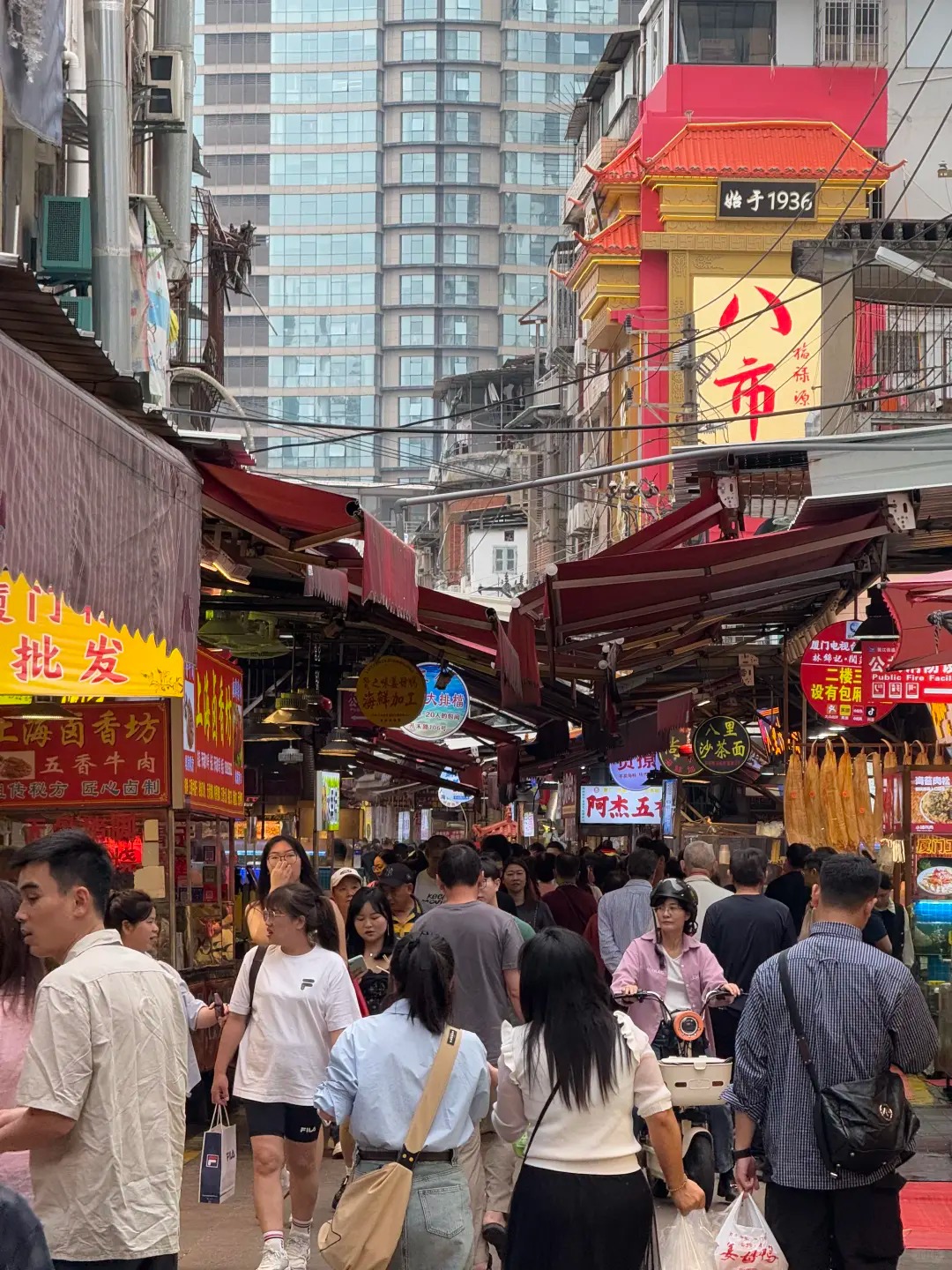



Yes, Xiamen is famous for Gulangyu Island – piano museums, colonial villas, and crowded ferry queues. But after three visits, I’d say the city’s real fame should be its “slow life” – and most tourists miss it. Go to Railway Cultural Park at 7 AM, watch locals practice tai chi under banyan trees, no ticket booths in sight. Or spend an afternoon in Jimei – take Metro Line 1’s sea-view stretch, walk the coastal promenade where students paint. And the food: shacha noodles with tofu puffs, peanut soup from Bashi Market at dawn, oyster omelets flipped on a griddle older than me. Gulangyu is fine, but go early or skip it. Xiamen’s true fame isn’t on the island – it’s in the quiet mornings and plastic stools. That’s what I’ll remember.