
Fujian Tulou 2026 Guide: Visiting China’s Hakka Earth Buildings
The Fujian Tulou are a UNESCO World Heritage Site, hailed as “Oriental Castles” and “Architectural Wonders of the World.” These unique, massive rammed-earth structures nestled in the mountainous southwest of Fujian represent an extraordinary residential system created by the Hakka people for defense against external threats and communal living. For modern travelers, exploring the Tulou offers a journey through time and space, providing not only awe-inspiring architecture but also deep insights into the history, ingenuity, and way of life of China’s Hakka people.
This guide is specifically designed for international visitors, offering comprehensive knowledge about the Tulou—from historical context and architectural details to optimal touring routes and practical travel tips.
Understanding Tulou: What Exactly Are They?

Core Definition of Tulou
Tulou are large, multi-story rammed-earth residential structures, typically circular or square in shape, featuring comprehensive defensive capabilities. Designed not for individual families but for entire clans (usually large families sharing the same surname), they accommodate tens to hundreds of people living together.
World Heritage Status: In 2008, “Fujian Tulou” was officially inscribed on the UNESCO World Heritage List, encompassing 46 of the most representative tulou structures.

The Historical Context of Tulou and the Hakka People
To understand tulou, one must first understand the Hakka people.
The Hakka: A Han ethnic group that migrated southward multiple times from the Central Plains (northern China) to Fujian, Guangdong, Jiangxi, and other regions throughout history. They refer to themselves as “guests,” meaning “outsiders.”
Why Tulou Were Built: During their migrations, the Hakka faced exclusion from local communities, bandit raids, and threats from wild animals. To survive, they created this unique architectural form combining residential, defensive, and communal functions. The earliest tulou date back to the 11th century, with most existing structures built between the 17th and 20th centuries.

How are Tulou built?
The construction of Tulou embodies extraordinary ingenuity and an eco-friendly philosophy of using locally sourced materials.
Primary Materials: Raw earth (local clay and red soil), timber, pebbles, bamboo strips.
Key Techniques Rammed Earth: Raw earth, sand, gravel, and lime are mixed in precise proportions. Bamboo strips or branches serve as reinforcing “bones.” The mixture is poured into wooden formwork and compacted layer by layer using heavy wooden mallets. Walls built this way become exceptionally sturdy, some reaching 2 meters thick.
Massive Walls: The ground and second floors typically lack windows to deter intruders.
Single Entrance: A heavy, iron-clad door features water-pouring holes to resist fire attacks.
Internal Well: An independent well within the building ensures a water supply during prolonged sieges.
Loopholes and Watchtowers: Upper levels incorporate observation slits and firing ports.
Where are Fujian Tulou located, and a brief introduction
Fujian Tulou are primarily distributed across the Yongding District, Nanjing County, and Hua’an County. Each possesses its own distinctive features and can typically be visited in combination.
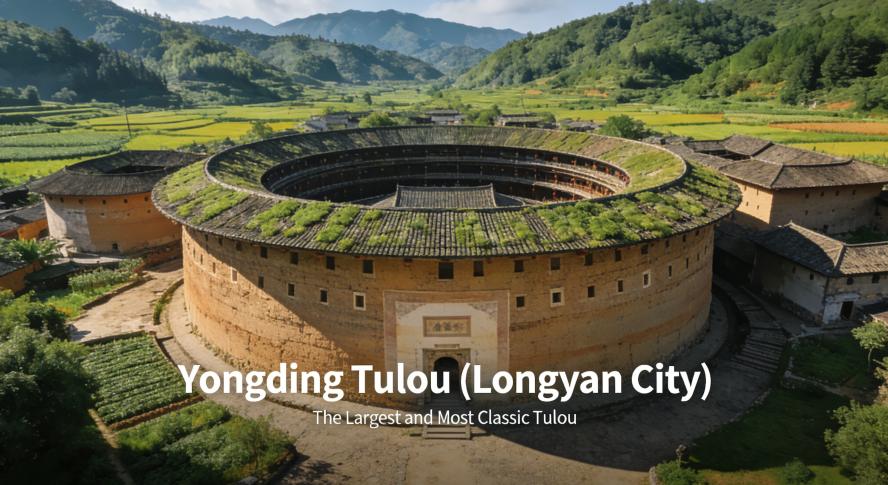
Yongding Tulou (Longyan City), the largest and most iconic
Core features: Boasts the highest number, most diverse types, and largest scale of tulou, earning it the title “Kingdom of Tulou.”
- Hongkeng Tulou Folk Culture Village:
Zhencheng Lou: Dubbed the “Prince of Tulou.” Built in 1912, it exemplifies Sino-Western architectural fusion. Its interior follows the Eight Trigrams layout of the I Ching, featuring public spaces like ancestral halls and schools, adorned with exquisite carvings.
Visitors can witness Hakka folk performances (e.g., wedding ceremonies, puppet shows). - Gaobei Tulou Complex:
Chengqi Lou: Known as the “King of Tulou.” Built in 1709, it is the largest existing circular tulou. With a diameter of 73 meters and a four-ring concentric structure, it once housed over 800 residents. A local proverb describes it: “Four stories high, four rings encircling, four hundred rooms above and below; circles within circles, rings within rings, enduring three centuries of vicissitudes.”
Wuyun Lou: One of the oldest surviving square-shaped tulou. - Chuxi Tulou Complex:
Though more remote, it offers spectacular scenery set against the mountains. With fewer tourists, it retains a more pristine, authentic atmosphere.
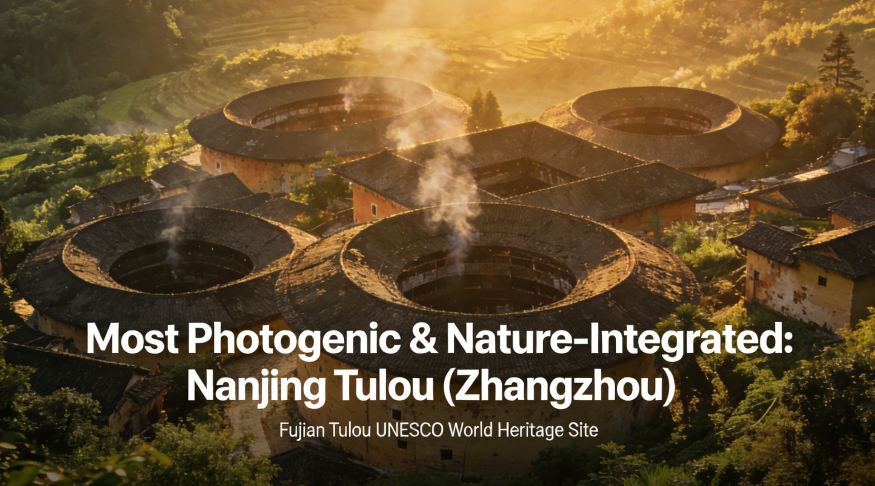
Nanjing Tulou (Zhangzhou City), Most photogenic and most beautifully integrated with nature
Core Features: Tulou buildings seamlessly blend with pastoral landscapes, offering exceptional photographic opportunities.
Must-See Highlights:
- Tianluokeng Tulou Cluster: A UNESCO-recognized iconic landscape.
Layout: Four circular buildings encircle a square one, known as “four dishes and a soup.” The view from the mountaintop observation deck is breathtaking.
Night Tour: Illuminated at night, it takes on a unique charm. - Yunshuiyao Ancient Village (formerly Changjiao Village):
Distinctive Features: Named after the film “Yunshuiyao.” An ideal spot for strolls, featuring century-old streets, millennia-old banyan trees, and crystal-clear streams.
Key Tulou: Heigui Lou (the tallest square tulou, built on marshland) and Huaiyuan Lou (one of the best-preserved and most exquisite double-ring circular tulou). - Hekeng Tulou Cluster:
This tulou complex resembles the Big Dipper constellation. From the viewing platform, visitors can take in 14 distinct tulou structures.
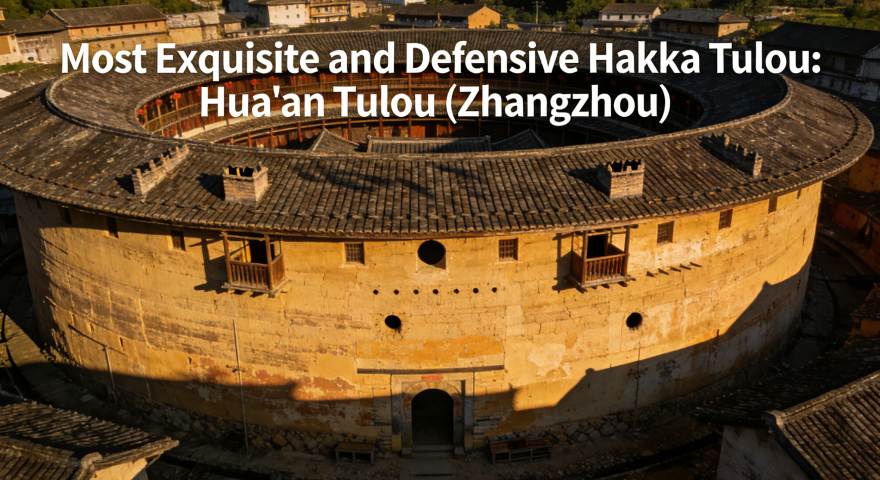
Hua’an Tulou (Zhangzhou City), the most exquisite and defensively strongest
Core Features: The interior decoration of these tulou is the most lavish, reflecting a higher social status and wealth.
Must-See Highlights:
Er Yilou: Hailed as the “King of Tulou” and a “treasure of residential architecture.” It features the most sophisticated defense system (including hidden corridors and secret passages) and boasts an abundance of colorful paintings, murals, and couplets, making it of immense cultural value.
Nanyanglou and Dongyanglou.
Fujian Tulou Travel Planning Guide
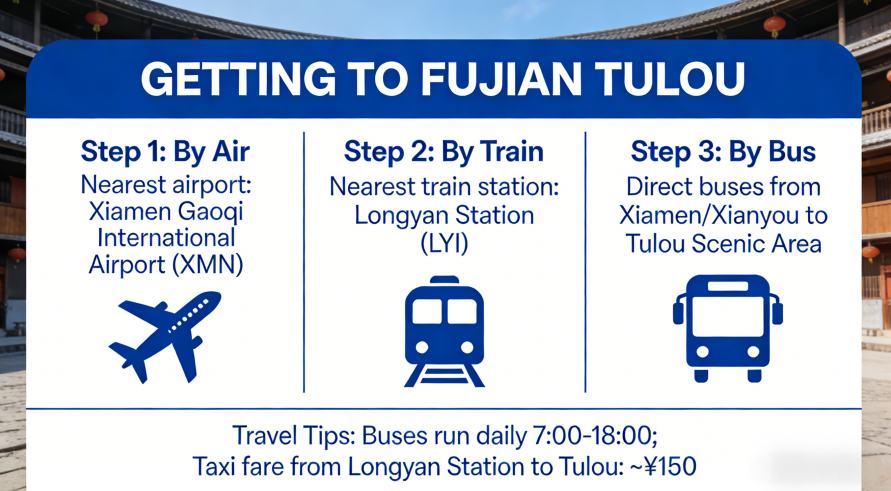
How to Get There and Transportation
Major Hub Cities:
Xiamen: The most frequently used international gateway. Departing from Xiamen offers the most convenient access to the Tulou, with a travel time of approximately 2.5 to 3.5 hours.
Longyan City: Features a high-speed rail station (Longyan Station), providing closer proximity to the Yongding Tulou.
Recommended Transportation Options:
- Day Tour Package (Most Convenient): Departing from Xiamen or Quanzhou, includes transportation, admission tickets, and guided commentary. Ideal for visitors with limited time.
- Chartered/Shared Vehicle (Flexible & Independent): Suitable for small groups of up to 24 people, with customizable itineraries.
- Public Transportation (Most Challenging): Requires multiple transfers (high-speed rail + bus + rural shuttle), suitable for budget-conscious backpackers with ample time.
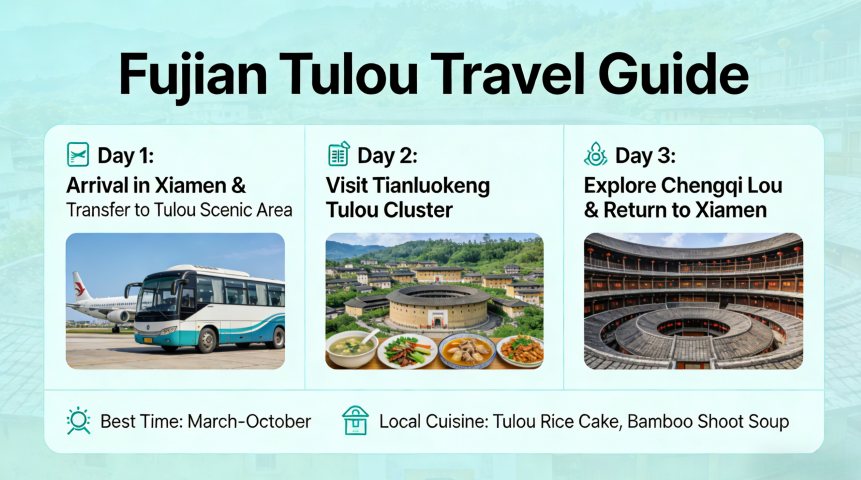
Fujian Tulou Itinerary Recommendations
One-Day Highlights Tour: Choose one core area for an in-depth visit. For example: Depart from Xiamen → Nanjing Tianshuokeng + Yunshuiyao, or Depart from Xiamen → Yongding Hongkeng + Gaobei Tulou Cluster.
Two-Day Immersion Tour:
Day 1: Visit Nanjing’s Tianshuokeng and Yunshuiyao, overnight stay in Yunshuiyao Ancient Town.
Day 2: Travel to Yongding, visit Hongkeng Folk Village and Gaobei Tulou Cluster, then return to Xiamen.
Three-Day Cultural Tour: Add Hua’an Dadi Tulou Cluster or the more remote Chuxi Tulou Cluster for a slower pace.
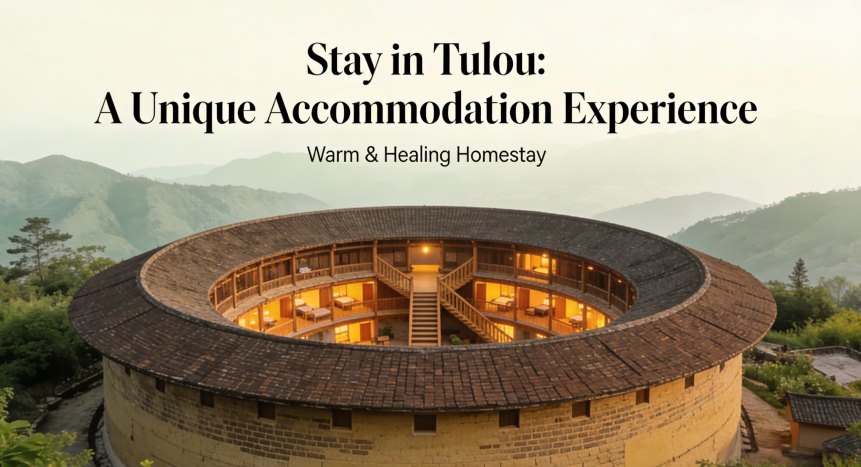
Staying in Tulou: A Unique Lodging Experience
Staying in Tulou? Some tulou (such as those in Yunshuiyao and Hongkeng) have been converted into homestays. This offers an excellent opportunity for an immersive experience, but note:
Conditions: Facilities are typically basic (shared bathrooms, poor soundproofing), though clean and tidy.
Atmosphere: Tulou are exceptionally tranquil at night and dawn, offering a genuine sense of historical ambiance.
Alternative Options: Staying at modern hotels outside scenic areas or boutique guesthouses in Yunshuiyao, Tashaxia Village, etc., provides greater comfort.

Best Time to Visit Fujian Tulou
Best Season: Spring (March–May) and Autumn (September–November). The weather is cool, and the mountain scenery is pleasant.
Avoid: Chinese national holidays (such as National Day and May Day), when crowds are extremely large.
Rainy Weather Note: The Tulou region experiences frequent rainfall. During the rainy season (May–June), roads may be slippery, but the mist-shrouded Tulou offer a unique charm.
Respecting Fujian Tulou Culture and Travel Tips
- Tulou are living communities: Many tulou still house residents. When visiting, please respect others’ privacy. Do not enter private living areas without permission, and smile to ask permission before taking photos.
- Listen to the narration: The stories of tulou lie in the details. Hiring a local guide or using an audio tour greatly enhances your experience, revealing architectural secrets and family histories.
- Savor Hakka Cuisine: Don’t miss local delicacies! Try stuffed tofu, salt-baked chicken, preserved vegetable pork belly, Hakka rice cakes, and sip a cup of Hakka rice wine.
- Attire and Gear: Mountain weather is unpredictable. Wear comfortable walking shoes and bring rain gear plus a light jacket.
- Photography Etiquette: Check local regulations before aerial photography—drones may be prohibited in certain areas. Avoid using flash indoors.
Exploring Fujian Tulou is far more than admiring unique architecture. It’s a dialogue with a resilient and wise culture, a living window into ancient Chinese family structures, and a testament to humanity’s harmonious coexistence with nature and environmental challenges. Standing at the heart of the colossal Chengqilou or gazing down upon the “four dishes and one soup” landscape, you’ll experience not just visual awe but a resonance that spans centuries.
Though less renowned than the Great Wall, its cultural depth and architectural uniqueness make it one of the most distinctive and unforgettable experiences on any journey through China.
Related Reading:
- Fujian Travel Guide 2026: Discover Tulou, Wuyishan, Xiamen & More
- Xiamen Travel: 8 Must-Visit Attractions & Hidden Gems (2026 Guide)
- xiamen 3 day itinerary
- What food is famous in Xiamen?
- Xiamen Attractions: 2026 Guide to Top 10 Must-See Places
- Fuzhou Travel Guide 2026: Best Things to Do, Eat & See in Fujian’s Capital



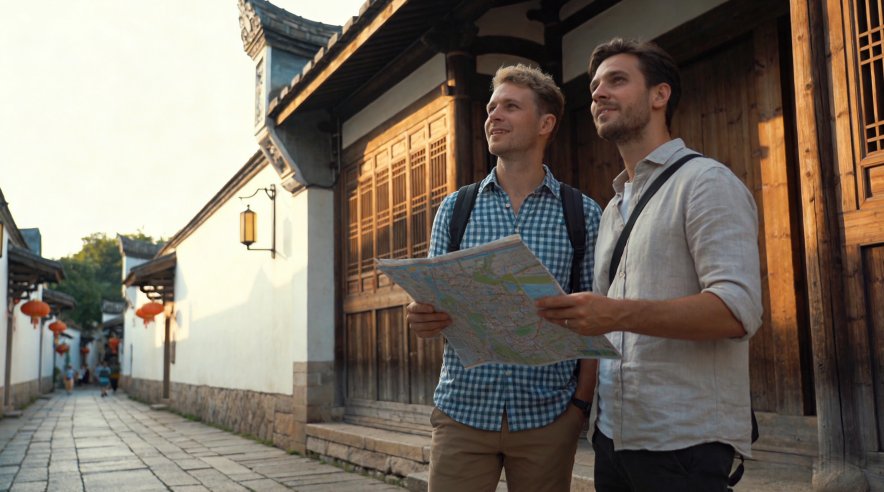
“Mobile signal can be weak in the remote valleys. Download offline maps (Google Maps is unreliable; use Maps.me or Baidu Maps) of the Ninghua/Yongding area before you go. While homestays and main ticket offices accept digital payments (Alipay/WeChat Pay), smaller family-run stalls and elderly residents may only accept cash (RMB). Have small bills on hand for snacks, drinks, or small souvenirs. Also, wear comfortable, non-slip shoes as the courtyards and stairs can be uneven and slippery when wet.”
“Remember, these are active homes, not museums. Always ask for permission before photographing residents, especially inside the courtyards. A smile and a gesture go a long way. Speaking a few words of Hakka or Mandarin (‘xiexie’ – thank you) is deeply appreciated. Support the community by buying small handicrafts or local tea directly from residents inside the tulou, rather than from the commercial shops outside the scenic areas.”
“While the iconic Tianluokeng cluster (‘Four Dishes and One Soup’) is a must-see for its panorama, it’s also the most crowded. Allocate more time to the magnificent Chengqi Lou in Gaobei cluster—the ‘King of Tulou’—and the elegant Zhencheng Lou in Hongkeng, known as the ‘Prince’. For an authentic and quiet atmosphere, visit Yuchang Lou in Taxia village, famous for its crooked pillars. This variety showcases the full spectrum, from communal fortresses to more refined, scholarly buildings.”
“The three main areas—Hongkeng, Tianluokeng, and Yunshuiyao—are spread out across winding mountain roads. Public transport is time-consuming and confusing. The best value for money is hiring a private car with a local Hakka driver-guide for 1-2 days. They not only navigate efficiently but also share stories about their own ancestry, explain architectural details (like the Feng Shui and defensive features), and get you access to upper floors that are often closed to casual visitors. Negotiate the price to include all parking and highway tolls.”
“Visiting the Fujian Tulou as a day trip from Xiamen is a common mistake. The magic happens after the last tourist bus leaves. Book a homestay inside a lesser-known but inhabited tulou cluster like Chuxi or Gaobei. Waking up to the sound of chickens, sharing simple Hakka home-cooked meals with the family, and seeing the courtyard under moonlight transforms it from a photo stop into a profound cultural immersion. For 2026, book these intimate stays early, as they have very limited rooms.”
Most visitors hit Tianluokeng (“Four Dishes One Soup”) first—big mistake. You’ll fight crowds at the most famous viewpoint and feel rushed. Instead, start with Chuxi Tulou Cluster—fewer tourists, more authentic village life, and a peaceful river running through. Then visit Hongkeng for the “Prince” (Zhencheng Lou) and “King” (Chengqi Lou). Save Tianluokeng for sunset when tour buses disappear. The light hits the five earth buildings perfectly, and you’ll have the viewing platform almost to yourself. Pro tip: stay overnight in Taxia Village—wake up at 6 AM, walk to the rice paddies, and watch mist rise over the tulou roofs while farmers tend fields. This single night transforms the experience from sightseeing to memory-making. Book homestays at least one month ahead for 2026.